
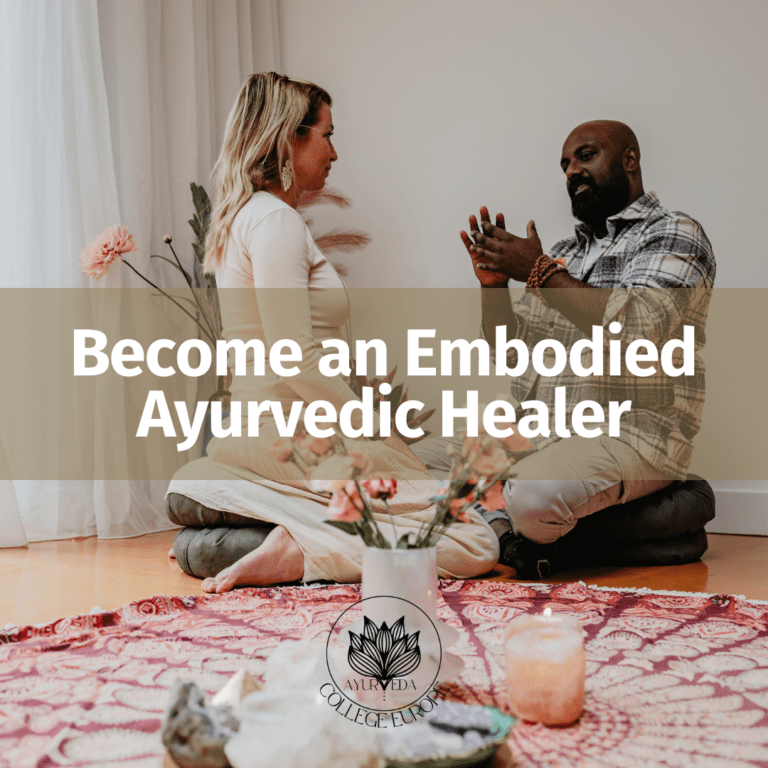
Being an embodied Ayurvedic healer involves integrating the principles and practices of Ayurveda into one’s daily life and professional practice. At our school this means:
1. Deep Understanding of Ayurvedic Principles: An embodied healer has a thorough understanding of the foundational concepts of Ayurveda, such as the three doshas (Vata, Pitta, Kapha), the five elements, and the importance of balance in maintaining health.
2. Practical Application: Beyond theoretical knowledge, an embodied healer applies Ayurvedic principles in practical ways, both in personal lifestyle choices and in client care. This includes using diet, lifestyle modifications, holistic therapies and herbal remedies to promote health and well-being.
3. Holistic Approach: Emphasizing a holistic view of health, an embodied healer considers the physical, mental, emotional, and spiritual aspects of a person. This approach is reflected in personalized treatment plans that address the root causes of health issues.
4. Commitment to Self-Care: An embodied healer practices self-care and self-awareness, recognizing the importance of maintaining their own health and balance to effectively support others.
5. Continuous Learning and Adaptation: Staying informed about the latest research and developments in Ayurveda, while also respecting traditional wisdom, is crucial. An embodied healer adapts their practice to incorporate new insights and techniques.
6. Ethical Practice and Compassion: Embodying Ayurveda involves practicing with integrity, compassion, and respect for all individuals, fostering a healing environment that supports transformation and growth.
In essence, being an embodied Ayurvedic healer means living and practicing Ayurveda authentically, with a commitment to personal growth and the well-being of others.
Fostering our students to become embodied Ayurvedic healers involves a holistic approach that integrates theoretical knowledge, practical application, and personal development.
How do we make it possible?
- Comprehensive Curriculum. We offer a curriculum that covers the foundational principles of Ayurveda, including the understanding of doshas, dhatus, and malas, as well as advanced topics like herbal formulations, detoxification therapies, panchakarma and marma therapy.
- Practical Training: We Provide hands-on training through workshops and in depth and extensive internships in your own country. This allows you as a student to apply your knowledge in real-world settings in your own community and gain practical experience in client consultations and treatment planning.
- Mentorship Programs: We Pair you with experienced Ayurvedic practitioners who can guide you through yout learning journey, offering insights and sharing experiences that enrich your understanding.
- Self-Development Practices: We Encourage you to engage in self-awareness practices such as meditation, yoga, and pranayama, tantra, vedic astrology. These practices and teachings help you embody the principles of Ayurveda and understand the importance of maintaining your own balance.
- Community Engagement: We facilitate opportunities for you to participate in community health programs, where you can educate the public about Ayurveda and its benefits, fostering a sense of service and responsibility.
- Integration of Modern Science: We Teach you how to integrate modern scientific research and knowledge with traditional Ayurvedic knowledge, enhancing your ability to communicate the benefits of Ayurveda in a contemporary context.
- Ethical and Professional Development: We Emphasize the importance of ethics and professionalism in practice, ensuring that you understand the responsibilities of being a healer.
By focusing on these areas, we can nurture you to become well-rounded, embodied Ayurvedic healers who are capable of making a positive impact on the health and well-being of your family, friends clients and your community.
Most importantly we encourage students to embody Ayurveda on the physical, emotional, mental, and spiritual level! It involves a comprehensive approach that integrates all aspects of your being. Here’s what it would mean on each level:
1. Physical Level:
- Diet and Lifestyle: Teach you to adopt Ayurvedic dietary principles and lifestyle practices that align with your dosha constitution. This includes mindful eating, regular exercise, and proper sleep routines.
- Herbal Knowledge: We encourage the use of Ayurvedic herbs and remedies to maintain physical health and address any imbalances.
2. Emotional Level:
- Emotional Awareness: Help you develop emotional intelligence by recognizing and understanding your emotions and how they relate to dosha imbalances.
- Stress Management: Incorporate stress-reduction techniques such as meditation, pranayama, and yoga to help you manage emotions and maintain balance but also have you experience different rituals and practices from tantra to manage stress.
3. Mental Level:
- Mindfulness Practices: Encourage practices that enhance mental clarity and focus, such as meditation and mindfulness exercises.
- Learning and Reflection: Promote continuous learning and self-reflection to deepen your understanding of Ayurvedic principles and their application in daily life.
4. Spiritual Level:
- Connection to Self: Guide you in exploring your inner self and understanding your unique purpose through spiritual practices like meditation, chanting, rituals or prayer.
- Holistic Perspective: Foster a holistic view of health that includes spiritual well-being as an integral part of overall health.
By encouraging embodiment on all these levels, you can experience a deeper integration of Ayurvedic principles into your life. This holistic approach not only enhances your personal well-being but also enriches your ability to guide others in achieving balance and health through Ayurveda and its sister sciences.